
 Return to all articles
 May 26, 2026
 Many adults begin college and pause before finishing. Online degree completion programs are designed specifically for students who want to finish their degree online without starting over.
Across the United States, the answer is increasingly yes. Tens of millions of adults have earned some college credit without completing a degree, and universities now offer structured online degree completion programs designed specifically to help those students apply prior learning and move steadily toward graduation.
What Online Degree Completion Programs Are Designed For
Online degree completion programs are bachelor’s degree pathways designed for students who already have college credit but did not finish their degree. Instead of starting from the beginning, students transfer eligible coursework and complete only what remains.
Most programs require around 60 transferable credits for admission, though that number can vary greatly. The remaining coursework depends on the degree and prior academic history, as well as any university policies on how many credits must be earned at the institution.
The answer isn’t black and white because the structure is intentionally designed for flexibility.
Courses are fully online and typically asynchronous, allowing students to complete coursework around work and family schedules. Many programs use shorter academic terms and multiple start dates each year, creating more entry points and reducing downtime between courses.
Who Online Degree Completion Programs Are Designed For
Online degree completion programs serve students who already have academic momentum but need a structured path to finish.
This often includes adults returning to college after several years away. According to the National Student Clearinghouse Research Center, 41.9 million U.S. adults have some college credit but no credential, highlighting the scale of unfinished degrees nationwide.¹
It also includes transfer students who attended multiple institutions without completing a program, as well as working professionals seeking a bachelor’s degree for career advancement or eligibility for promotion.
In each case, the defining factor is prior learning that can be applied toward a completed degree rather than repeated.
How Transfer Credits Apply Toward Your Degree
Transfer credit is one of the most important elements of degree completion. It determines how much progress a student has already made before re-enrolling.
Most regionally accredited institutions accept transfer coursework if it meets minimum grade and content requirements. General education courses such as English composition, introductory math and social sciences often transfer more easily than specialized or upper-level major courses.
A typical evaluation considers:
- Regional accreditation of prior institution
- Course grade (commonly C or higher)
- Relevance to degree requirements
- Age and applicability of technical coursework
Many programs also evaluate Credit for Prior Learning (CPL), which can recognize workplace training, military service or professional certifications. The Council for Adult and Experiential Learning (CAEL) reports that CPL recipients are more likely to complete their degrees and may reduce both time and cost to graduation.²
How Long it Takes to Finish a Degree Online
Completion timelines depend primarily on how many credits transfer into the program at the start.
Most adult learners finish in one to three years. The breakdown typically looks like this:
Students with 90 or more transfer credits often need only about one year of additional coursework. Those with 60 to 89 credits usually complete their degree in one to two years. Students with fewer than 60 credits may need two to three years depending on pacing.
| Total Number Accepted | 90+ Transfer Credits | 60–89 Transfer Credits | 60 or Fewer Transfer Credits |
| Average Time to Completion | 1 Year | 1–2 Years | 2–3 Years |
Accelerated course structures can shorten timelines. Many programs use seven-week terms, which allow students to complete more courses per year than a traditional semester system.
Cost, Financial Aid and Affordability
For many returning students, affordability is a central concern. Federal financial aid is available regardless of age, and most adult learners qualify as independent students when completing the FAFSA.
Key funding sources include federal Pell Grants, which do not require repayment and are based on financial need, as well as federal student loans and institutional aid where available.
The FAFSA (Free Application for Federal Student Aid) is required to access federal funding and is available at no cost through the U.S. Department of Education. There is no age limit for applying.
Tax credits may also reduce cost. The IRS notes that eligible students may qualify for the American Opportunity Tax Credit, which provides up to $2,500 per year for qualified education expenses.3
Employer tuition assistance is another frequently underused resource. Many organizations reimburse part or all of tuition costs for employees pursuing degrees aligned with job responsibilities.
Transfer credit also plays a financial role, which is particularly relevant to degree completion online programs. Every accepted credit reduces the number of courses a student must complete, which directly reduces total tuition costs.
How Employers View Online Degrees
Employer acceptance of online education has increased significantly in recent years. Today, accreditation and institutional reputation matter far more than how coursework is delivered.
The National Association of Colleges and Employers (NACE) reports that a majority of employers have hired candidates with online degrees and that acceptance continues to grow as online education becomes more common in higher education.4
At accredited institutions, diplomas and transcripts do not indicate whether coursework was completed online or in person. The degree reflects only the institution and the credential earned.
What to Look for in a Strong Online Degree Completion Program
Not all online programs are structured to support degree completion effectively. If you want to finish your degree online, a strong program typically includes four essential elements:
1. Accreditation status
2. Transfer credit policies
3. Format flexibility
4. Built-in support
Regional accreditation is the foundation, ensuring the degree is recognized by employers and other institutions. Transfer-friendly policies are equally important, particularly programs that maximize the number of applicable credits and evaluate prior learning.
Flexibility also matters. Programs with multiple start dates, asynchronous courses and accelerated terms allow students to balance education with work and personal commitments.
Finally, advising support plays a critical role in student success. Research from Lumina Foundation indicates that adult learners are more likely to persist and complete their degrees when they receive consistent academic and financial guidance.⁶
Completing Your Degree at UNC Wilmington
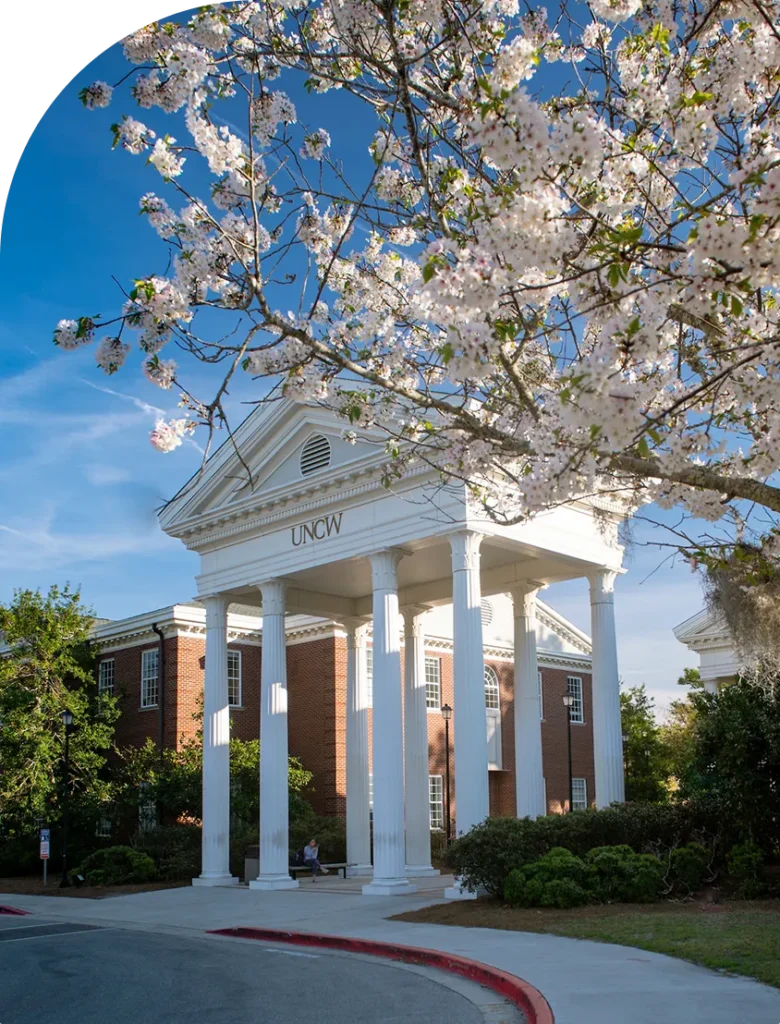
At UNC Wilmington, online degree completion programs are designed for students who are ready to finish what they started. These programs, which we call Flight Path programs, accept eligible transfer credits, including prior college coursework from regionally accredited institutions, and in many cases allow students to bring in a substantial portion of their previous academic work.
Courses are fully online and asynchronous, with 7-week terms and multiple start dates throughout the year. This structure is designed to support steady progress without requiring students to pause other responsibilities.
Students are supported by dedicated academic advisors who help map out a clear path to graduation from the beginning. UNCW online degree completion courses are taught by the same faculty who teach on campus, and all programs are built to meet institutional academic standards under SACSCOC accreditation.
UNCW also offers Credit for Prior Learning in select programs, allowing students to potentially earn credit for professional experience, military training or industry certifications depending on program guidelines.
For students with prior college credit, the most important first step is a credit evaluation. This provides a clear picture of how much progress has already been made, what remains and how long completion may take. No enrollment decision is required to request this evaluation.
UNCW’s online programs are built around a simple idea: most students are not starting over. They are finishing something already in progress, and the structure should reflect that reality.
Not Sure What’s Right for You?
Your situation is specific. So is the conversation you’ll have with an admissions specialist. They’ll look at what you’ve already earned, show how it applies to a UNCW degree and point you toward the program that actually fits your life. Reach out whenever you’re ready, even if “ready” just means curious.